

 English
 Français

Unfinished Obelisk in Aswan: History, Facts & Visitor Guide
The Unfinished Obelisk in Aswan offers one of the clearest surviving views of how ancient Egyptian craftsmen worked directly inside a granite quarry. Still attached to the bedrock, the enormous monument preserves tool marks, quarry trenches and the evidence of the stone flaws that brought the project to an end.
What Is the Unfinished Obelisk?
The Unfinished Obelisk lies in one of Aswan’s ancient granite quarries. Instead of being a freestanding monument, it remains partly connected to the rock from which it was being cut. This unusual state is exactly what makes the site so useful: visitors can see stages of quarrying that are normally hidden once a finished monument has been detached, transported and erected.
Egypt’s Ministry of Tourism and Antiquities attributes the project to the reign of Queen Hatshepsut, one of the most important rulers of the 18th Dynasty. The ministry states that the obelisk would have reached roughly 42 metres in height and weighed about 1,168 tonnes if it had been completed.
4 Important Facts About the Unfinished Obelisk
It would have been exceptionally large
At around 42 metres long and an estimated 1,168 tonnes, the completed monument would have been taller than any surviving ancient Egyptian obelisk. Its scale helps explain why the Aswan quarries are essential for understanding ancient Egyptian monumental engineering.
It was cut from Aswan granite
Aswan was one of ancient Egypt’s major sources of hard granite. Stone from the region was used for statues, architectural elements and obelisks throughout Egypt. The quarry setting allows you to see the monument in the geological landscape where it was created.
Cracks stopped the project
Work was abandoned after flaws and fissures appeared in the granite. Because an obelisk had to function as one enormous stone block, serious cracking could make the finished monument structurally unsuitable for extraction, transport and erection.
The unfinished state preserves quarrying evidence
The trenches, working surfaces and marks around the monument provide rare physical evidence of stone-working techniques. Rather than seeing only a polished finished object, visitors can examine part of the production process itself.
How Were Ancient Egyptian Obelisks Quarried?
The obelisk was shaped directly in the granite bedrock. Workers removed stone around the planned block, gradually creating trenches that defined its sides. Experience Egypt also highlights evidence around the site such as quarry trenches, red-ink notes connected with work activity and hard stone pounding tools used in the extraction process.
The final challenge would have been separating the underside from the bedrock, moving the massive block out of the quarry and transporting it toward its intended destination. Because the Aswan obelisk was never fully detached, the site preserves a step in the process that finished obelisks no longer show.
Why Was the Unfinished Obelisk Abandoned?
The best-supported explanation is geological: flaws and multiple fissures appeared in the granite. Once cracks threatened the integrity of the monolith, continuing the project would have risked producing a monument that could break during extraction, transport or erection.
Earlier descriptions sometimes speculate about political changes, financial pressure or shifting royal priorities. Those possibilities are not needed to explain the abandonment and should not be presented as established facts. The visible cracking and the official archaeological description provide a clearer evidence-based explanation.
What Should You Look for During Your Visit?
- The full outline of the obelisk still lying in the quarry
- Visible cracks that help explain why work stopped
- Trenches cut around the granite block
- Stone-working marks on the quarry surfaces
- The scale of the surrounding ancient granite quarry
- Interpretive material explaining how large blocks were extracted
The site rewards slow observation. A guide or Egyptologist can add useful context because much of its importance lies in reading the quarry itself rather than looking at a finished temple façade.
Unfinished Obelisk Visitor Guide: Hours, Tickets & Practical Tips
Visitor information |
Current official listing |
|---|---|
Opening hours |
7:00 AM–4:00 PM daily |
Foreign adult ticket |
EGP 220 |
Foreign student ticket |
EGP 110 |
Egyptian adult ticket |
EGP 20 |
Egyptian student ticket |
EGP 10 |
Best time of day
Because the quarry is exposed to the sun, an early visit is usually more comfortable, especially in warmer months. Comfortable walking shoes, sun protection and drinking water are sensible choices.
How long should you allow?
For most travelers, the site works well as a focused archaeological stop rather than an all-day attraction. Allow enough time to walk around the quarry viewpoints, study the cutting marks and understand how the monument was being separated from the bedrock.
What to Combine With the Unfinished Obelisk in Aswan
The quarry fits naturally into a wider Aswan itinerary. After exploring the monument, you can continue with the Nile landscape, Philae, a felucca experience or a southern extension to Abu Simbel. For destination planning, see the Alacart Travel Egypt Aswan guide.
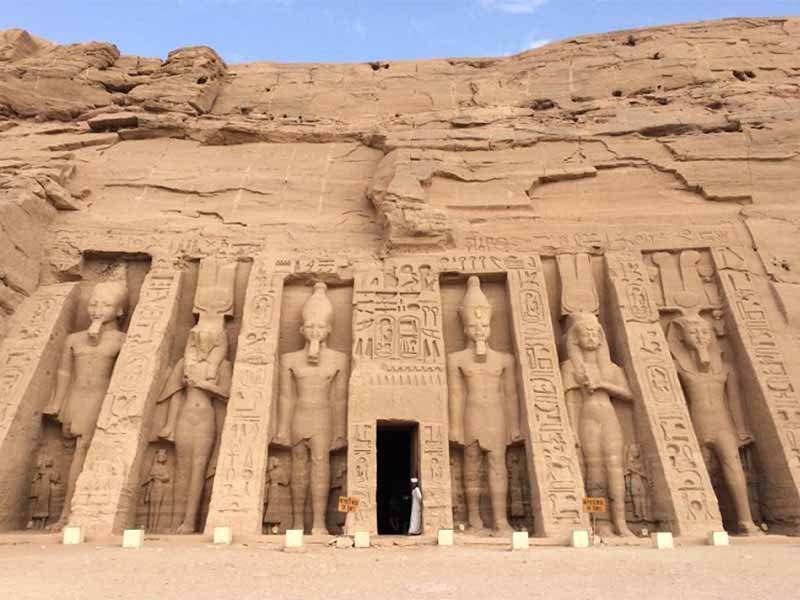
If Abu Simbel is part of your plan, you can also review the Abu Simbel Temple Tour from Aswan by car.
Is the Unfinished Obelisk Part of a UNESCO World Heritage Site?
Yes. The ancient granite quarries and the Unfinished Obelisk in Aswan are included within the wider UNESCO World Heritage property known as the Nubian Monuments from Abu Simbel to Philae. This places the quarry within a much larger protected cultural landscape extending across southern Egypt.
Frequently Asked Questions
Who commissioned the Unfinished Obelisk?
It is generally believed to have been commissioned during the reign of Queen Hatshepsut of the 18th Dynasty, probably for the temple of Amun at Karnak.
How big is the Unfinished Obelisk?
Egypt’s Ministry of Tourism and Antiquities gives an approximate height of 42 metres and an estimated completed weight of about 1,168 tonnes.
Why was the Unfinished Obelisk never completed?
Work stopped because flaws and fissures appeared in the granite, making the huge monolith unsuitable for completion as a single intact obelisk.
Is the Unfinished Obelisk still attached to the rock?
Yes. It remains partly attached to the original bedrock, which is one reason the site is so important for understanding ancient quarrying techniques.
What can you actually see at the site?
Visitors can examine the enormous granite block, the quarry trenches, stone-working marks and the cracks that contributed to the abandonment of the project.
What are the opening hours?
The current official listing shows 7:00 AM to 4:00 PM daily. Always verify current hours before visiting because operational information can change.
How can I include the site in an Aswan itinerary?
It can be combined with other Aswan highlights such as Philae, Nile sailing and additional southern-Egypt excursions. A private itinerary can make it easier to balance archaeological stops with time on the Nile.
Plan Your Aswan Experience With Alacart Travel Egypt
Want to combine the Unfinished Obelisk with Aswan’s Nile scenery, Philae and other Upper Egypt highlights? Alacart Travel Egypt can build a private itinerary around your travel dates and interests.



Comment (0)