

 English
 Français
Can You Travel to Egypt While Pregnant? Safety, Planning & Flexible Egypt Itineraries
Traveling to Egypt while pregnant can be possible for many people with an uncomplicated pregnancy, but the trip should be planned around your gestational age, medical history, airline or cruise rules, heat, daily walking and access to care. This guide explains the health-planning questions first, then shows how an Egypt itinerary can be adjusted around a gentler pace.
Health information first. Travel planning second.
The page is intentionally structured this way: understand whether the trip may be appropriate for you, then compare ways to make the route less demanding.
Is it safe to travel to Egypt while pregnant?
For many people with an uncomplicated pregnancy, international travel can be possible with appropriate preparation. ACOG says travel is usually safe until close to the due date when there are no medical or pregnancy complications, but it recommends discussing the trip with your obstetric clinician before you go.
The word uncomplicated matters. Travel may not be appropriate when there are conditions such as preeclampsia, preterm labor or prelabor rupture of membranes, or when a medical problem could worsen during travel or require emergency care.
Egypt is also not one single travel environment. A private Cairo stay with short transfers and hotel breaks is very different from several long road days, a strenuous desert itinerary or a schedule that combines multiple outdoor archaeological sites in extreme heat.
What is the best time in pregnancy to visit Egypt?
ACOG identifies 14 to 28 weeks as the period that is often easiest for travel. Morning sickness has often improved, energy may be better and mobility is generally easier than later in pregnancy. Individual circumstances can change that timing.
First trimester
Nausea, vomiting and fatigue can make long flights and full sightseeing days harder. The risk of miscarriage is naturally higher in early pregnancy whether you travel or not.
Second trimester
Often the most comfortable stage for travel when pregnancy is progressing normally. Medical review, insurance and destination planning still matter.
Later pregnancy
Mobility, airline rules, cruise cut-offs and access to obstetric and newborn care become increasingly important as pregnancy advances.
What should you arrange before traveling to Egypt while pregnant?
Flying to Egypt during pregnancy
Occasional air travel is generally considered safe in an uncomplicated pregnancy, but airline restrictions differ. ACOG notes that many airlines allow flying until about 36 weeks, while international travel may have earlier cut-offs. NHS guidance also notes that airlines may request a medical letter after week 28.
During a long flight
- Choose an aisle seat when possible.
- Move your feet and legs regularly.
- Walk periodically when it is safe to do so.
- Stay hydrated.
- Wear the seat belt low across the hips and below the abdomen.
Before you leave
- Check the airline policy for both outbound and return dates.
- Ask whether a fit-to-fly letter is required.
- Discuss compression stockings with your clinician if appropriate.
- Do not use “36 weeks” as a universal airline rule.
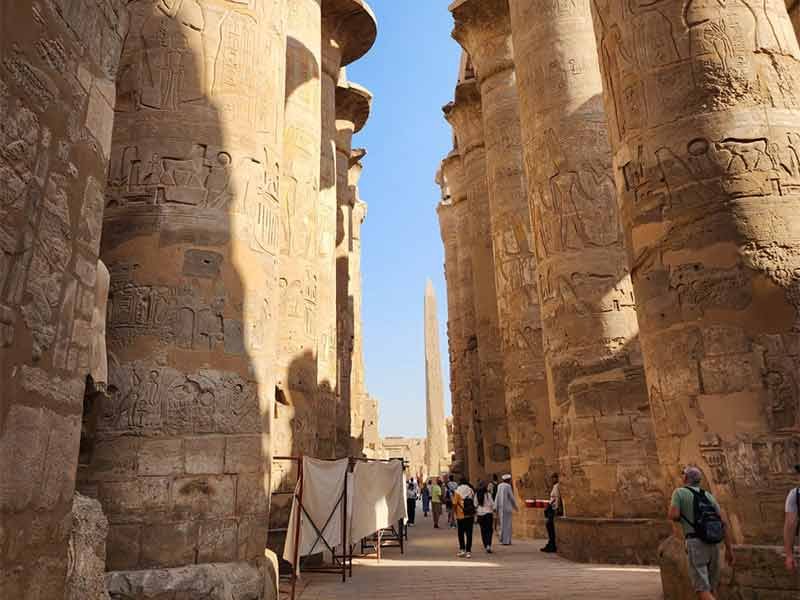
A temple morning and a Nile afternoon can demand very different energy.
The strongest pregnancy-aware itinerary does not remove Egypt's highlights. It changes the order, timing and intensity of the experience.

Vaccines and health entry requirements for Egypt during pregnancy
Travel-vaccine decisions during pregnancy should be individualized. CDC recommends reviewing travel vaccines and medicines with a healthcare professional before international travel because pregnancy changes how some vaccines are used.
CDC's Egypt traveler guidance currently recommends hepatitis A for unvaccinated travelers and typhoid vaccination for most travelers. Yellow fever vaccination is not routinely recommended for Egypt itself, but proof can be required when arriving from certain countries with yellow-fever risk, including some long airport transits. Your full routing matters.
Food and water safety in Egypt during pregnancy
Avoiding food- and water-borne illness matters for every traveler, and pregnancy makes dehydration and some infections more concerning.
Safer choices
- Factory-sealed bottled or appropriately treated water.
- Food cooked thoroughly and served hot.
- Fruit that can be washed safely and peeled.
- Pasteurized milk and dairy products.
- Restaurants with good hygiene and high turnover.
Use extra caution with
- Raw or undercooked meat, fish, shellfish and eggs.
- Unpasteurized milk, cheese or yogurt.
- Raw produce that cannot be washed or peeled safely.
- Ice or drinks when the water source is uncertain.
- Food that has been standing warm for long periods.
Egypt's heat: how should pregnant travelers adapt sightseeing?
Egypt can be extremely hot, particularly in Upper Egypt and during summer. Pregnancy can make heat and dehydration harder to tolerate, so route timing matters as much as the list of attractions.
Which Egypt activities should be adapted or avoided during pregnancy?
Pregnancy does not automatically remove every activity from an Egypt trip, but fall risk, heat, remote access and strenuous exertion all deserve more attention.
How to make the main Egypt stops easier to pace.
A more comfortable itinerary is not simply a shorter trip. It gives the demanding parts of Egypt more space and keeps recovery time between them.
Split major sights
Do not automatically combine Giza, a major museum and Historic Cairo into one long day. Use a private vehicle and allow a hotel break.
Choose fewer sites
The West Bank is spread out and can be hot. Prioritize a smaller number of tombs and temples rather than entering everything.
Luxor guide →Use the slower rhythm
Shorter sightseeing blocks and river time can balance more intensive archaeological days, but heat still matters.
Aswan guide →Check the ship policy
A cruise may reduce daily hotel changes, but verify pregnancy cut-offs, cabin comfort, excursion demands and medical access.
Egypt programs you can use as a starting point — then adapt the pace.
These are existing Alacart Travel Egypt routes, not pregnancy-specific tours. If your healthcare provider is comfortable with the trip, use the program structure as a starting point and ask to adjust transfers, sightseeing intensity, free time and accommodation according to your needs.
Cairo & Nile Cruise
A published 10-day route linking Cairo with Aswan, Luxor and a Nile cruise component.
Cairo & Dahabiya Journey
A longer Cairo and Upper Egypt route built around a smaller-scale Dahabiya sailing experience.
Tailor-Made Egypt Tour
Use a custom itinerary when the main priority is controlling daily pace, transfer length, hotel location and rest periods.
Not sure which route is realistic for your pregnancy stage?
First review the proposed itinerary with your healthcare provider. Once you know the travel limits you want to respect, Alacart Travel Egypt can help restructure the tourism logistics around that brief.
When should you seek urgent medical care while traveling?
If you need medical care abroad, clearly tell the healthcare team that you are pregnant and how many weeks pregnant you are. Do not continue sightseeing through symptoms that may indicate a pregnancy or medical emergency.
Questions travelers ask before booking Egypt.
The answers below keep the page informational while helping travelers move toward a realistic itinerary decision.
Can I go to Egypt while pregnant?
Is Egypt safe for pregnant women?
What trimester is best for an Egypt trip?
Can I fly to Egypt in the third trimester?
Is a Nile cruise a good option during pregnancy?
Can an Egypt tour be customized for pregnancy?
Can I scuba dive in Egypt while pregnant?
What should I carry in case I need medical care?
What is the best way to book Egypt if I need a slower pace?
Check current official guidance before travel.
Pregnancy guidance, airline policies, vaccine recommendations and entry requirements can change. Use these sources as a starting point and confirm the current position before departure.
Make the itinerary fit your pace — not the other way around.
Once your healthcare provider has confirmed that your planned travel is appropriate, build the Egypt route around shorter sightseeing blocks, comfortable transport, convenient hotel locations and enough free time to adjust the day when needed.
Planning principle: published programs are useful route templates. Pregnancy suitability is individual, so medical decisions stay with your healthcare team while the travel itinerary can be adjusted around your confirmed needs.



Comment (0)