

 English
 Français
Historic Façades
Give yourself time to look above the street level. Doorways, stonework, inscriptions, windows and decorative details help turn an ordinary walk into an architectural visit.
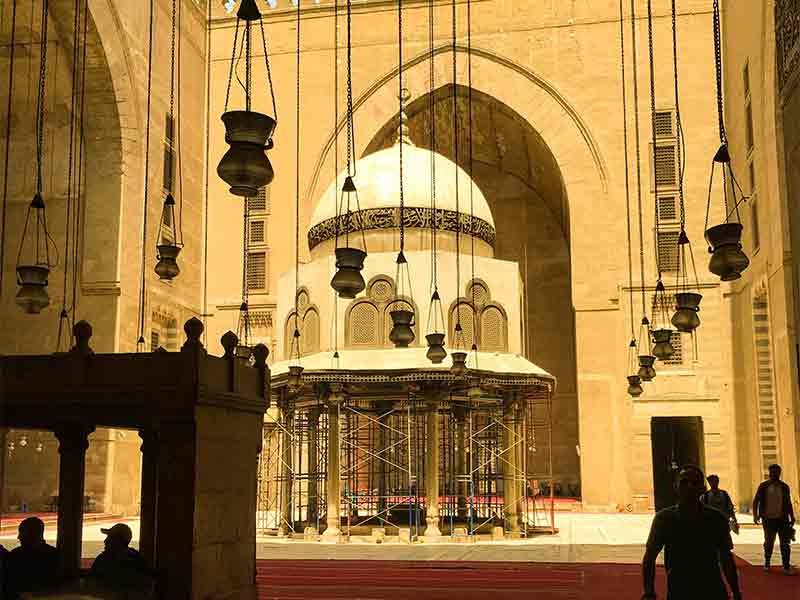
An islamic cairo walking tour is about much more than visiting individual mosques. The experience comes from moving through historic streets, reading architectural details, passing traditional markets and seeing how different periods of Cairo remain connected within the same urban landscape.
This route is designed for travelers who want to experience historic cairo tours through a focused sequence rather than a rushed collection of unrelated attractions. The day can center on Al-Muizz Street and Khan El-Khalili, then continue toward the Sultan Hassan and Al-Rifa'i area or the Citadel according to your available time.
Historic Cairo becomes easier to understand when the itinerary follows geography instead of jumping between distant landmarks. The central walking experience can begin around Al-Muizz Street, continue through nearby historic monuments and Khan El-Khalili, then use private transport to reach the monumental mosque cluster around Salah El-Din Square when the schedule allows.
Start in the medieval urban fabric rather than immediately entering a major monument. This creates context for the architecture that follows.
Slow the pace around historic façades, religious buildings, gateways and restored architectural details instead of treating the street as a simple transfer point.
Shift from monumental architecture to the living commercial side of historic Cairo, with lanes, cafés, craft shops and market activity.
Add Sultan Hassan and Al-Rifa'i, then continue to the Citadel when time and energy allow.
Al-Muizz is one of the most useful places to build the walking portion of the day because the street brings together multiple historic structures within a concentrated urban setting. The current Alacart Travel Egypt guide describes it as the core walking experience of Islamic Cairo and highlights its monuments, façades, sabils, madrasas and changing street activity. Explore the Islamic Cairo attractions guide before your visit.
Give yourself time to look above the street level. Doorways, stonework, inscriptions, windows and decorative details help turn an ordinary walk into an architectural visit.
Historic Cairo is not an open-air museum without daily life. Shops, workshops, cafés and pedestrians continue to shape the experience around the monuments.
A walking itinerary works better when you leave time to stop, photograph and listen rather than trying to maximize the number of buildings visited.
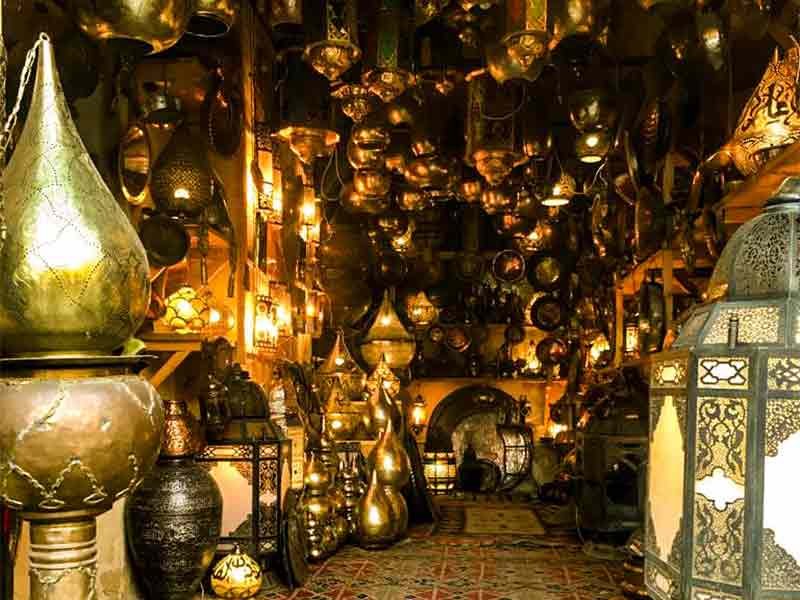
Khan El-Khalili works best when it is treated as more than a souvenir stop. The current Islamic Cairo guide places it directly alongside Al-Muizz as one of the most useful walking clusters in the historic center.
Rather than rushing through every lane, choose a few areas to explore, allow time for a café break and keep the transition from monument-focused sightseeing to market life intentional.
After the narrow streets and market lanes of Al-Muizz and Khan El-Khalili, the Sultan Hassan and Al-Rifa'i area creates a striking change in scale. The two monuments face each other across Salah El-Din Square, making them especially useful for comparing different periods of Cairo's monumental architecture.
Sultan Hassan represents monumental Mamluk architecture. Its large scale, central courtyard, iwans and attached religious spaces provide a very different experience from the tighter streets and smaller façades found deeper inside the historic city.
Travelers interested in architectural photography can spend additional time studying symmetry, proportions, stone surfaces and the way the complex dominates the surrounding urban space.
Al-Rifa'i belongs to a much later historical context and was designed to visually relate to Sultan Hassan. Visiting the two together makes the chronological contrast easier to see without needing to travel to another district.
This pairing works particularly well within historic cairo tours when the visitor wants architecture to remain the central theme of the day.
The Citadel works as a separate block rather than something that should be squeezed into the walking portion. The current site guide recommends treating the Citadel and the Al-Muizz area as different clusters, using transport between them when needed.
Introduce the broader defensive and political history of historic Cairo from the elevated complex before focusing on the mosque interiors.
The mosque adds a later architectural layer, with a large central dome, semi-domes and Ottoman-influenced design that contrasts with earlier Mamluk monuments.
The elevated location gives the itinerary a visual pause after several hours spent at street level, especially useful for travelers interested in city photography.
The existing Cairo Tours page currently positions Islamic Cairo, the Citadel, Old Cairo, museums and Khan El-Khalili as distinct but compatible sightseeing themes that can be combined according to available time.
Ibn Tulun is useful when your priority is architectural comparison rather than market atmosphere. The current Islamic Cairo guide identifies it as one of Cairo's earliest major surviving mosques and highlights its large courtyard, stucco decoration and distinctive spiral-form minaret.
Available Time |
Suggested Route |
Best For |
|---|---|---|
3–4 hours |
Al-Muizz Street → Khan El-Khalili |
Travelers who want a concentrated walking experience without adding too many separate areas.
|
Half Day |
Al-Muizz → Khan El-Khalili → selected historic monuments |
Visitors who want street heritage and a little more architectural depth.
|
Full Day |
Al-Muizz → Khan El-Khalili → Sultan Hassan → Al-Rifa'i → Citadel |
Travelers who want a broader Historic Cairo program with multiple architectural periods.
|
Architecture Focus |
Al-Muizz → Sultan Hassan → Al-Rifa'i → Ibn Tulun |
Visitors prioritizing mosques, architectural details and historical comparison over shopping.
|
Mixed Cairo Heritage |
Islamic Cairo + Coptic Cairo + market atmosphere |
Travelers who want to compare the capital's Islamic and Christian historic districts during the same stay.
|
Timing matters because this itinerary mixes ticketed monuments, active religious spaces, outdoor walking and a market district. A good schedule does not simply start early; it places each kind of experience at the time when it works best.
Use the earlier part of the day for locations with fixed opening arrangements and for the longer walking portions before the city becomes more intense.
This is useful for combining the architectural walk with the changing atmosphere around Al-Muizz and Khan El-Khalili.
Khan El-Khalili and nearby city streets can continue into the evening, while ticketed monuments should be handled earlier in the day.
Opening hours, access arrangements, prayer access and monument ticket rules can change. The current Islamic Cairo guide specifically recommends checking official information shortly before the visit rather than relying on static historical schedules.
The experience includes uneven streets, standing inside monuments and extended walking. Comfortable footwear can make a noticeable difference.
Modest clothing is appropriate when visiting active mosques. Carrying a light layer can make it easier to adapt between outdoor walking and religious interiors.
Keep water, sun protection, a small day bag and the payment method you prefer for cafés, market purchases and incidental expenses.
For broader clothing guidance, especially when your Egypt itinerary includes mosques, churches and other religious sites, see the site's Egypt packing guide .
Not every visitor needs the same Historic Cairo itinerary. Some want architecture and photography, others want markets and local atmosphere, while others want to compare Islamic and Coptic heritage in a single Cairo stay. The most useful route is the one that matches those priorities without forcing every possible attraction into one day.
Decide whether architecture, markets, religious heritage, photography or broader Cairo history should lead the day.
Choose whether you have a focused half-day, a full day or more than one Cairo sightseeing day.
Build the sequence around nearby clusters and use transport only when moving between separate areas.
Leave enough time for photos, cafés, monument visits and breaks rather than measuring success by the number of stops.
Alacart Travel Egypt's current travel-planning pages describe private and tailor-made programs where the route, pace and sightseeing priorities can be shaped around the travel party. You can also use Egypt Day Tours when the Historic Cairo visit is being added to a larger Egypt itinerary.
The current Cairo tour structure on the site treats these as different sightseeing stories, which makes it easier to separate a Historic Cairo day from a Giza and Ancient Egypt day instead of compressing both into one overloaded itinerary.
Tell us whether your priority is Al-Muizz and Khan El-Khalili, mosque architecture, the Citadel, photography or a wider Historic Cairo experience. The route can then be shaped around your available time and the other parts of your Egypt itinerary.