
 English
 Français
Bahariya Oasis Attractions: 16 Places & Experiences to Explore
From palm groves and hot springs to ancient tombs and dramatic desert scenery, Bahariya Oasis attractions combine archaeology, local life and some of Egypt’s most striking Western Desert landscapes. This guide separates places inside the oasis from desert excursions toward the Black Desert, White Desert and Crystal Mountain so you can plan the route accurately.
Why Visit Bahariya Oasis?
Bahariya is the Western Desert oasis closest to Cairo and is known for a combination of archaeological sites, date palms, olive groves, springs and desert landscapes. The official Experience Egypt portal highlights the Valley of the Golden Mummies as one of its major archaeological draws and describes the oasis as a convenient starting point for desert exploration.
16 Best Bahariya Oasis Attractions
Bawiti
Bawiti is the main town of Bahariya and the most practical base for accommodation, local guides and trips into the surrounding desert. Walking through town and nearby palm groves gives the trip a local dimension before you head toward the archaeological sites.
Valley of the Golden Mummies
One of Bahariya’s most important discoveries is a large Graeco-Roman burial area known for mummies decorated with gilded masks and Egyptian-Graeco-Roman funerary imagery. Access to individual archaeological areas can vary, so confirm what is open locally before planning the day.
Tomb of Bannentiu
The tomb of Bannentiu is among Bahariya’s best-known decorated tombs. Its painted religious scenes make it an important stop for travelers who want more than desert scenery and are interested in the oasis’s ancient funerary traditions.
Ain el-Muftella
Ain el-Muftella is an archaeological area near Bawiti associated with ancient temple remains. It adds useful context to the religious and agricultural history of the oasis, especially when visited with a knowledgeable local guide.
Temple of Alexander the Great
This temple complex is traditionally associated with Alexander the Great and helps illustrate Bahariya’s importance during the Late and Graeco-Roman periods. Opening and access conditions should be checked locally.
Qarat Hilwa
Qarat Hilwa is known for the tomb of Amenhotep-Huy, an official connected with Bahariya. It is one of the oasis’s older pharaonic sites and is valuable for travelers interested in the history of Bahariya before its later Graeco-Roman prosperity.
Oasis Heritage Museum
The locally created heritage museum uses clay figures and displays to represent traditional oasis life, clothing and everyday activities. Because small local museums can change opening arrangements, confirm current access before making a special trip.
Hot & Cold Springs
Natural springs are a defining part of Bahariya’s oasis environment. Experience Egypt lists Ain Gomma, Al-Jaffara, Bir Al-Mattar and Bir Ramla among better-known springs in and around the oasis. Use local advice to choose suitable bathing spots.
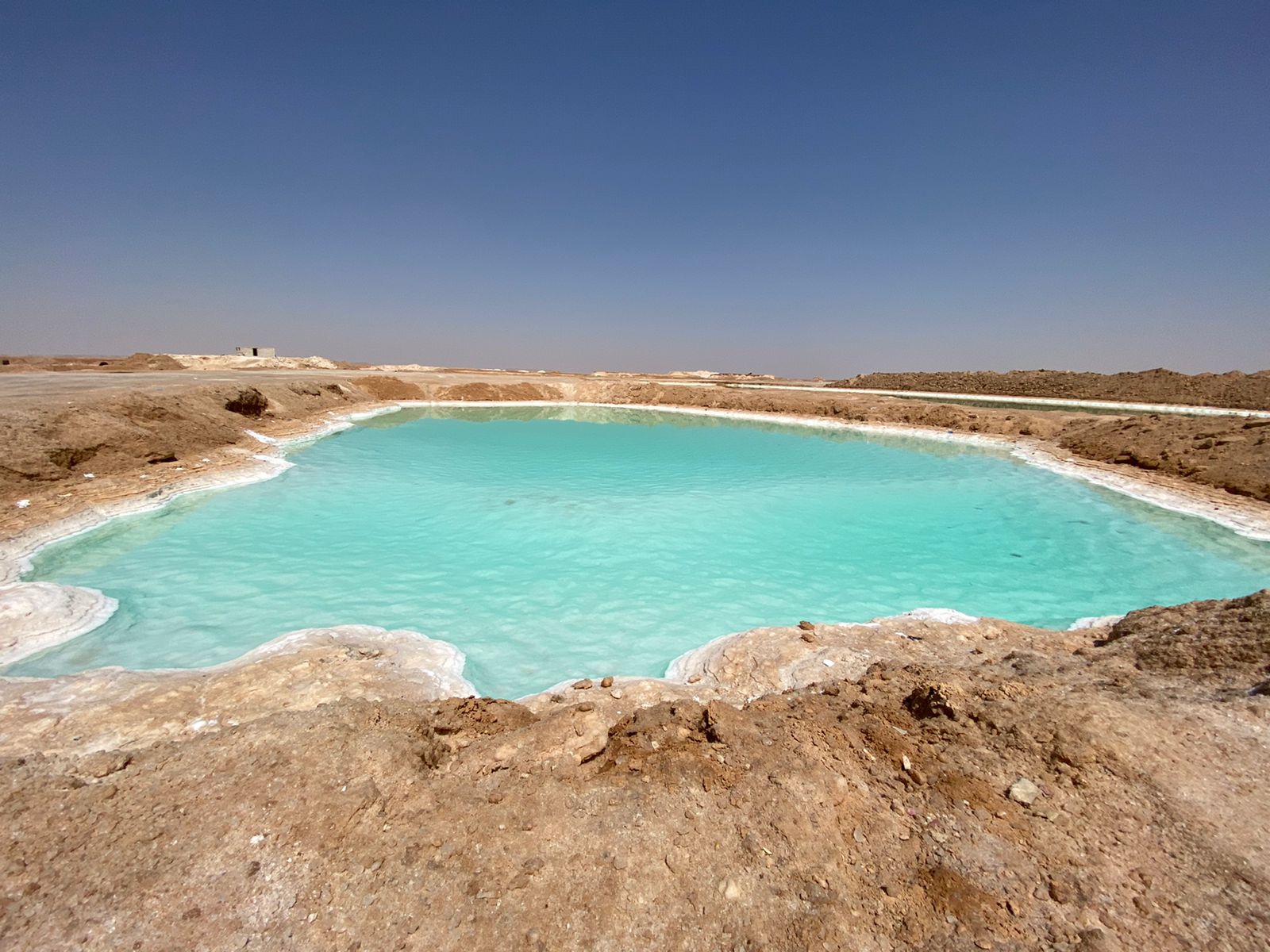
Bahariya Salt Lake
The oasis’s salt-lake landscapes offer a visual contrast to the surrounding black hills, gardens and desert. Conditions vary by season and water level, so ask locally about the best viewpoint or access point during your visit.
Gebel al-Ingleez
Also called English Mountain, this elevated site is known for broad views across Bahariya. Official Egyptian tourism information recommends it as one of the oasis’s best viewpoints, making it especially worthwhile around softer late-afternoon light.
Gebel Maghrafa
Gebel Maghrafa is associated with fossil discoveries and Bahariya’s rich geological story. It is a useful stop for travelers interested in how the oasis connects ancient environments, desert geology and paleontology.
Black Desert
Dark volcanic-looking hills and black stones give this landscape its name. The Black Desert is one of the signature excursions associated with Bahariya and creates a dramatic visual contrast with the pale chalk formations farther south.
White Desert Route: Major Excursions South of Bahariya
White Desert Protectorate
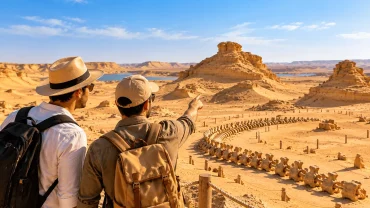
Wind-eroded chalk formations, pale desert floors and distinctive mushroom-shaped rocks make the White Desert one of Egypt’s most recognizable desert landscapes. It lies closer to Farafra than Bawiti, but many multi-stop safaris begin from Bahariya and continue south.
Crystal Mountain
Crystal Mountain is a striking geological formation on the desert route between Bahariya and Farafra. Its calcite-rich structure and natural arch make it a popular short stop on 4x4 itineraries heading toward the White Desert.
Agabat Valley
Agabat is known for broad golden sands, dunes and pale cliffs. It is best treated as part of a properly planned desert route rather than an independent self-drive stop, especially when continuing through remote terrain.
Desert Camping & Sandboarding
Camping under clear desert skies and trying sandboarding can turn a sightseeing route into a full Western Desert experience. For excursions outside the oasis, official tourism advice recommends experienced, licensed guides and suitable 4x4 vehicles.
How to Plan a Bahariya Oasis Trip
Planning point |
Practical guidance |
|---|---|
From Cairo |
Bahariya is around 370 km southwest of Cairo; the road journey is commonly around five hours. |
Recommended stay |
Allow at least 2 days for the oasis itself; add more time for White Desert camping or a longer safari. |
Best season |
Cooler months are generally more comfortable for desert sightseeing and camping. |
Desert transport |
Use an experienced licensed guide/operator and a suitable 4x4 for routes outside the oasis. |
Permits & access |
Requirements and archaeological-site access can change. Confirm current arrangements before departure. |
What to Pack for Bahariya & the Western Desert
- Passport or ID and booking confirmations
- Water and snacks for long road sections
- Sun hat, sunglasses and sunscreen
- Comfortable closed walking shoes
- Warm layer for cool desert evenings
- Power bank and offline maps
- Cash in Egyptian pounds
- Personal medication and basic first-aid items
Bahariya Oasis or Siwa Oasis?
Choose Bahariya if your priority is a shorter route from Cairo, archaeology, the Black Desert and access to a White Desert safari. Choose Siwa if you want a more remote oasis stay centered on salt lakes, Siwan culture, Shali and the Great Sand Sea.
If you are comparing Egypt’s Western Desert destinations, read our Siwa Oasis travel tips before deciding how to divide your itinerary.
Frequently Asked Questions About Bahariya Oasis
Where is Bahariya Oasis?
Bahariya lies in Egypt’s Western Desert, around 370 km southwest of Cairo. It is the closest major Western Desert oasis to the capital.
How long does it take to get from Cairo to Bahariya?
The road journey is commonly around five hours, depending on the vehicle, stops and current road conditions.
Is the White Desert inside Bahariya Oasis?
No. The White Desert lies farther south toward Farafra. Bahariya is a common starting point for 4x4 safaris that continue through the Black Desert, Crystal Mountain and White Desert route.
What are the best attractions in Bahariya Oasis itself?
Major highlights include Bawiti, archaeological tombs and temples, the Valley of the Golden Mummies area, springs, Gebel al-Ingleez and local oasis landscapes.
Do I need a guide for the desert?
For remote desert excursions, a licensed and experienced local guide with a suitable 4x4 is strongly recommended. Current permit and access requirements should also be checked before travel.
How many days should I spend in Bahariya?
Two days can cover several oasis highlights, while three days or more is better if you want a White Desert route, overnight camping or a slower archaeological itinerary.
What is the best time to visit Bahariya Oasis?
The cooler months are usually more comfortable for desert travel. Even then, desert evenings can be cold, so pack a warm layer if you plan to camp.
Plan a Private Bahariya & White Desert Journey
Want to combine Bahariya’s archaeological sites with the Black Desert, Crystal Mountain and an overnight White Desert experience? Alacart Travel Egypt can build a private Western Desert route around your dates and preferred travel pace.

Comment (0)