

 English
 Français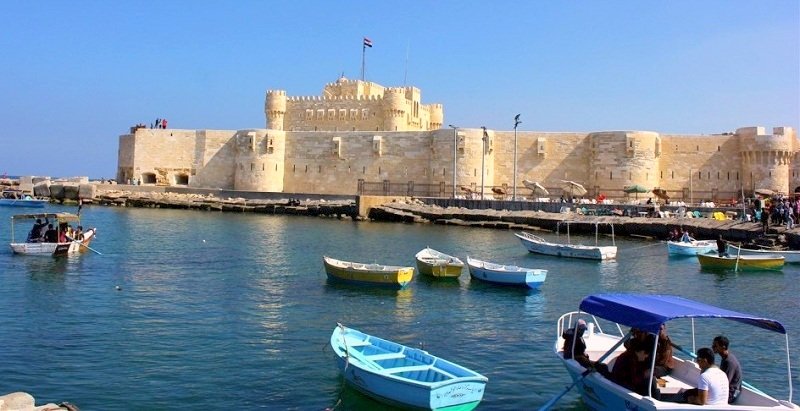
Alexandria Attractions: 6 Best Places to Visit
Explore Alexandria through a focused route connecting its Ptolemaic and Roman past, medieval waterfront, modern library and Mediterranean character.
These Alexandria 6 attractions create a practical first-time itinerary: Qaitbay Citadel, Bibliotheca Alexandrina, the Catacombs of Kom el-Shoqafa, Pompey’s Pillar and the Serapeum, Kom el-Dikka, and Montaza Gardens.
Founded by Alexander the Great in 331 BC near an earlier Egyptian settlement called Rhakotis, Alexandria became the capital of Ptolemaic Egypt and one of the ancient Mediterranean’s most influential cities. Much of ancient Alexandria lies beneath the modern city or the sea, so today’s landmarks span archaeology, Islamic fortification, royal-era landscapes and contemporary culture.
Why visit Alexandria?
Alexandria feels different from Cairo and Upper Egypt. Its archaeology reflects interaction between Egyptian, Greek and Roman traditions, while the Corniche, fishing harbor and seafood culture keep the Mediterranean central to everyday life.
The surviving sites are spread across a large modern city. Grouping western archaeological attractions together and leaving the eastern waterfront for another part of the day makes the itinerary more efficient.
1Qaitbay Citadel
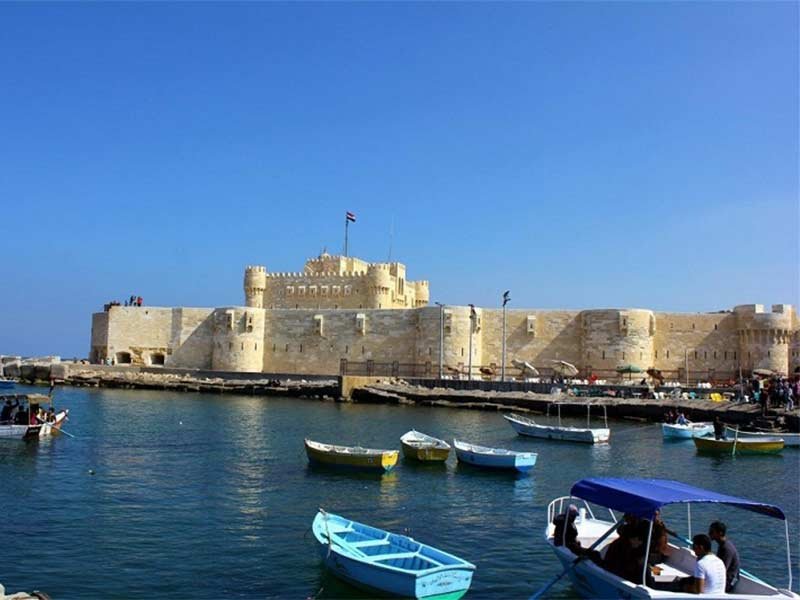
Qaitbay Citadel occupies the end of the Pharos peninsula, close to the location traditionally associated with Alexandria’s ancient lighthouse. Sultan al-Ashraf Qaitbay commissioned the fortress in the late fifteenth century as part of the city’s coastal defenses.
The citadel is valuable not because it recreates the lost lighthouse, but because it frames Alexandria’s later maritime history. Walk around the exterior, harbor and defensive spaces, then look back toward the Corniche for one of the city’s clearest waterfront views.
Best for
Medieval architecture, sea views, photography and understanding Alexandria as a defended Mediterranean port.
2Bibliotheca Alexandrina
The modern Bibliotheca Alexandrina opened in 2002 near the ancient city’s royal quarter. It is not a reconstruction of the lost ancient library; it is a contemporary cultural institution inspired by Alexandria’s historic association with scholarship.
The complex includes the main reading area, exhibitions, museums, specialized libraries and a planetarium. Access varies according to the ticket and program, so decide whether you want a brief architectural visit or several hours exploring collections.

3Catacombs of Kom el-Shoqafa
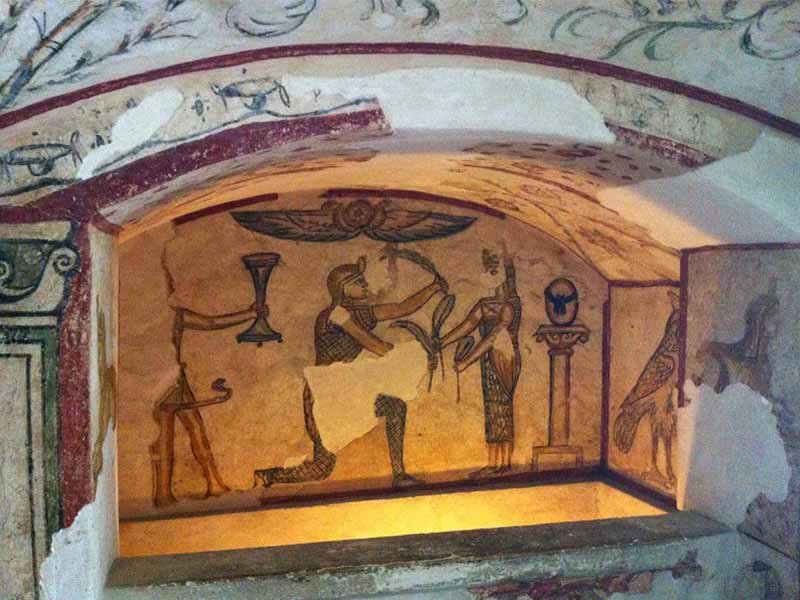
Kom el-Shoqafa is a Roman-period underground funerary complex and one of the strongest places to see Alexandria’s blended visual culture. Its architecture and reliefs combine Egyptian religious imagery with Greek and Roman forms.
Visitors descend by stairs into rock-cut chambers arranged on multiple levels. The surviving spaces include burial niches, a central rotunda and decorated chambers associated with funerary ritual and commemorative dining.
Before entering
The site involves enclosed underground spaces and stairs. Visitors with mobility difficulties or claustrophobia should ask about current access before descending.
4Pompey’s Pillar and the Serapeum
The towering monument commonly called Pompey’s Pillar is actually a late third-century AD column erected in honor of Emperor Diocletian. Its popular name is historically misleading: it has no direct connection with the Roman general Pompey.
The column stands beside the remains of the Serapeum, once Alexandria’s major sanctuary of the god Serapis. Although relatively little of the temple survives above ground, the site helps explain the religious and political importance of Roman Alexandria.
Look for
The scale of Diocletian’s Column, surviving sphinxes, architectural fragments and subterranean areas associated with the sanctuary.
Combine it with
Kom el-Shoqafa, which is nearby and continues the story of Alexandria’s mixed Egyptian and Greco-Roman religious traditions.
5Kom el-Dikka
Kom el-Dikka is Alexandria’s most substantial surviving non-funerary archaeological site. Excavations revealed an odeon often called the Roman Amphitheatre, a large bath complex, lecture halls, houses with mosaics and workshop spaces dating mainly from the late Roman and Byzantine periods.
The site changes the visitor’s understanding of ancient Alexandria: it was not only a city of royal palaces and monuments, but also a place of education, performance, bathing, housing and work.
6Montaza Gardens
Montaza offers a change of pace after Alexandria’s dense archaeological core. The landscaped royal estate occupies a large coastal area east of the city center and is associated with palaces developed under Egypt’s former royal family.
Visit primarily for gardens, sea views and the exterior setting. Access to individual buildings and zones may be restricted or affected by restoration and event arrangements, so do not plan the visit around guaranteed palace interiors.
Best time
Late afternoon is pleasant for a slower walk, but allow extra transport time because Montaza is well east of the central attractions.

How to plan one or two days in Alexandria
One-day highlights
Start at Kom el-Shoqafa and Pompey’s Pillar, continue to Kom el-Dikka, visit Bibliotheca Alexandrina, and finish at Qaitbay Citadel near sunset. This is a full schedule and requires efficient transport.
Two-day itinerary
Use day one for western archaeology, Qaitbay and the Corniche. On day two, explore Bibliotheca Alexandrina at a slower pace, then continue east to Montaza Gardens.
Area | Main attractions | Suggested sequence | Planning note |
|---|---|---|---|
Western Alexandria | Catacombs and Serapeum | Morning | Underground and outdoor archaeology |
Central Alexandria | Kom el-Dikka | Late morning | Allow time for exposed archaeological areas |
Eastern Harbor | Bibliotheca and Qaitbay | Afternoon | Check library closing time before reversing the order |
Eastern Alexandria | Montaza Gardens | Separate half-day | Traffic makes it inefficient to squeeze into a short city-center route |
Practical Alexandria travel tips
- Use a car with a driver or reputable taxi service when combining distant sites.
- Start with western archaeological sites before midday heat and traffic build.
- Check Bibliotheca Alexandrina’s Friday closure and separate museum schedules.
- Wear supportive shoes for archaeological ground and underground stairs.
- Allow more travel time during summer weekends and evening Corniche traffic.
- Ask before photographing inside museums, catacombs or restricted interiors.
- Try local seafood, but confirm prices and preparation before ordering.
- For a Cairo day trip, prioritize four or five sites rather than forcing all six into a rushed schedule.
Frequently asked questions about Alexandria attractions
What are the best attractions in Alexandria?
For a first visit, prioritize Qaitbay Citadel, Bibliotheca Alexandrina, Kom el-Shoqafa, Pompey’s Pillar and the Serapeum, Kom el-Dikka, and Montaza Gardens.
Can Alexandria be visited as a day trip from Cairo?
Yes, but it creates a long day. A private day trip can cover the main highlights, while an overnight stay allows time for Montaza, museums and the waterfront.
Is Bibliotheca Alexandrina the ancient Library of Alexandria?
No. It is a modern cultural and research institution inspired by the ancient library’s legacy. The original ancient library has not survived as a visitable building.
Is Pompey’s Pillar connected to Pompey?
No. The popular name is misleading. The monument is a late Roman column associated with Emperor Diocletian and stands beside the Serapeum.
How long do I need in Alexandria?
One full day covers major highlights at a brisk pace. Two days are better for archaeology, the library, the Corniche and Montaza without rushing.
Are the Catacombs of Kom el-Shoqafa suitable for everyone?
The underground route includes stairs and enclosed spaces. Visitors with mobility difficulties, breathing concerns or claustrophobia should ask about current access before entering.
What is the best time of year to visit Alexandria?
Spring and autumn generally offer comfortable sightseeing weather. Summer is popular for the coast but can bring humidity, crowds and heavy waterfront traffic.
Do Alexandria attraction hours stay the same?
No. Hours, fees and restoration closures can change, especially on holidays. Verify the latest official information shortly before visiting.
Explore Alexandria with a private guide
Connect the city’s catacombs, Roman remains, Mediterranean fortress and modern library through a well-paced route tailored to your available time.
Explore Egypt Day Tours

Comment (0)